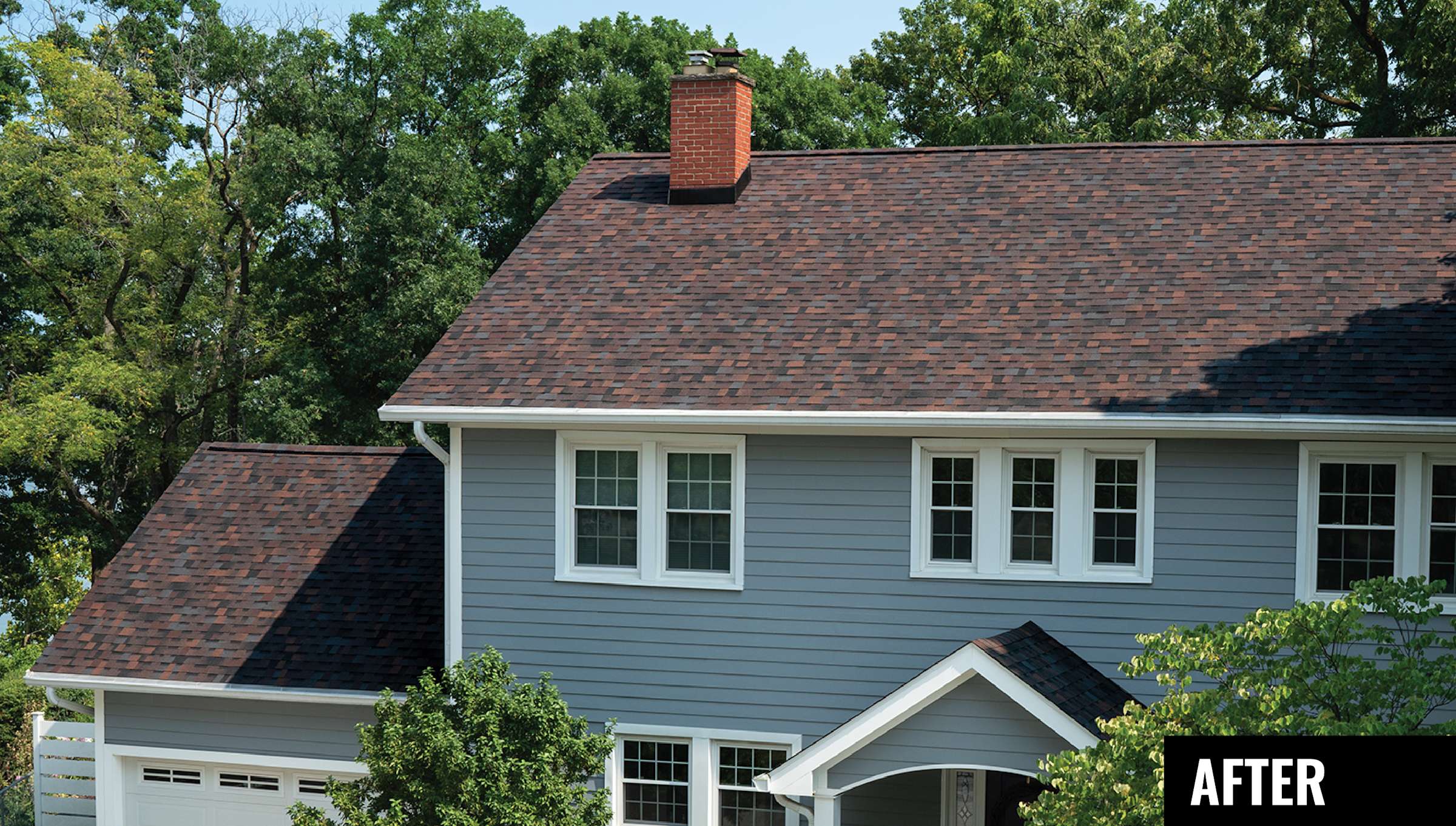
You do not need to get on a ladder to start reading your roof after a storm. There is a lot you can see just by walking the property line, and knowing what to look for tells you whether this is a "call someone today" situation or a "keep an eye on it" situation. Here is what we teach every new person on our crew to check from the ground, before anyone climbs anything.
Start at the Downspouts, Not the Roof
The first thing we check after a storm is not the shingles, it is what has washed down into the gutters and out the downspouts. A normal amount of granule loss happens on any asphalt shingle roof over time. A sudden, heavy dose of granules sitting in the downspout discharge or splash block right after a hailstorm is a signal that the hail did real work on the shingle surface up top.
Walk the Yard for Debris You Didn't Put There
Look for granules in the grass, torn pieces of shingle, bits of flashing, or soft metal debris that has no business being on the ground. Wind-driven debris in the yard after a storm is a reasonable reason to have someone take a closer look, even if nothing looks obviously wrong on the roofline from where you're standing.
Look at the Roofline's Edges, Not Just the Field
From the ground, you can usually see the roof's edges, ridge line, and any valleys better than you can see the flat field of shingles in the middle. Look for shingles that appear lifted, curled, or missing outright along those edges, and for a ridge line that looks uneven compared to before the storm. Binoculars help here more than most people expect.
Check the Gutters for Dents and Sag
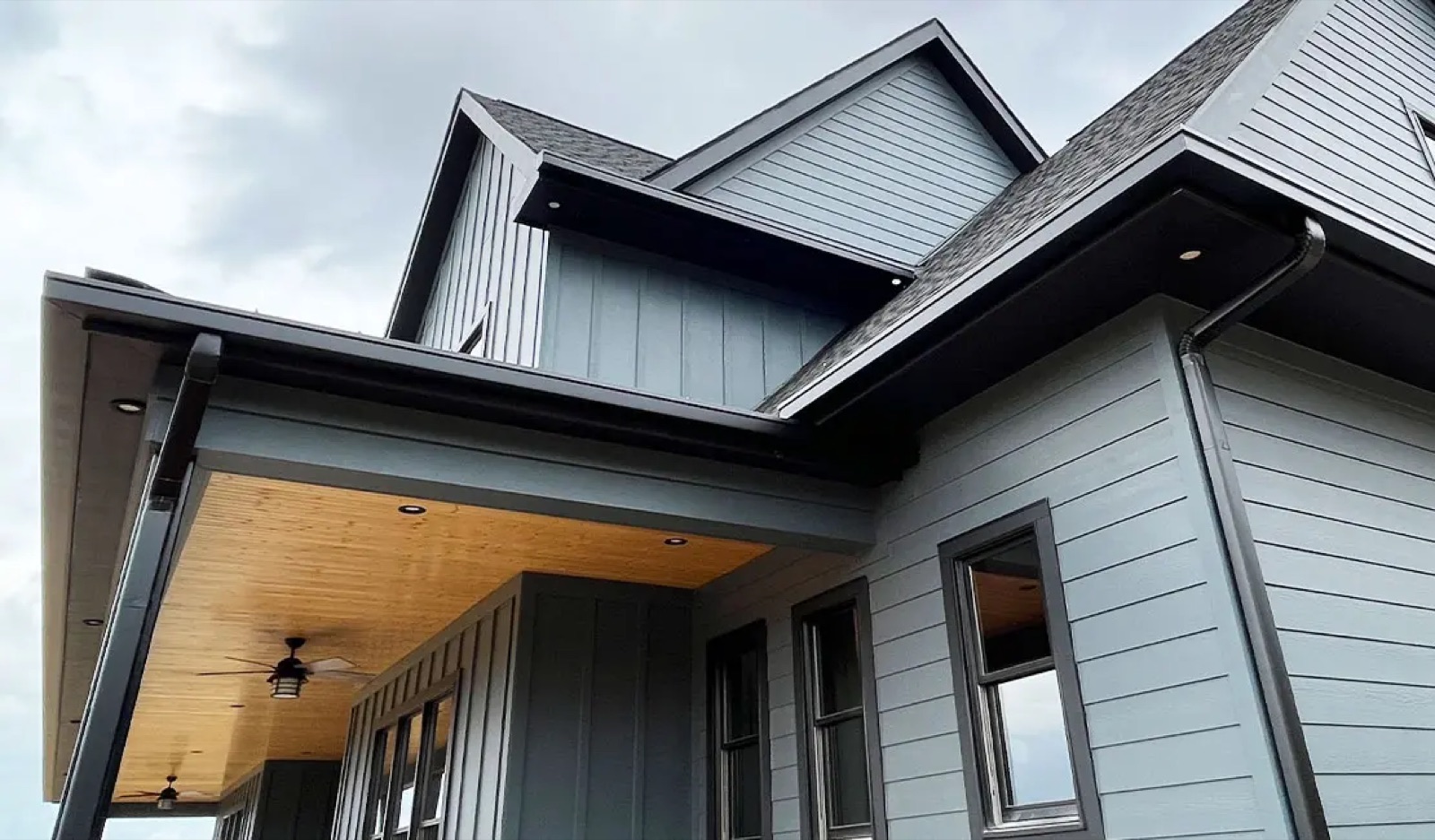
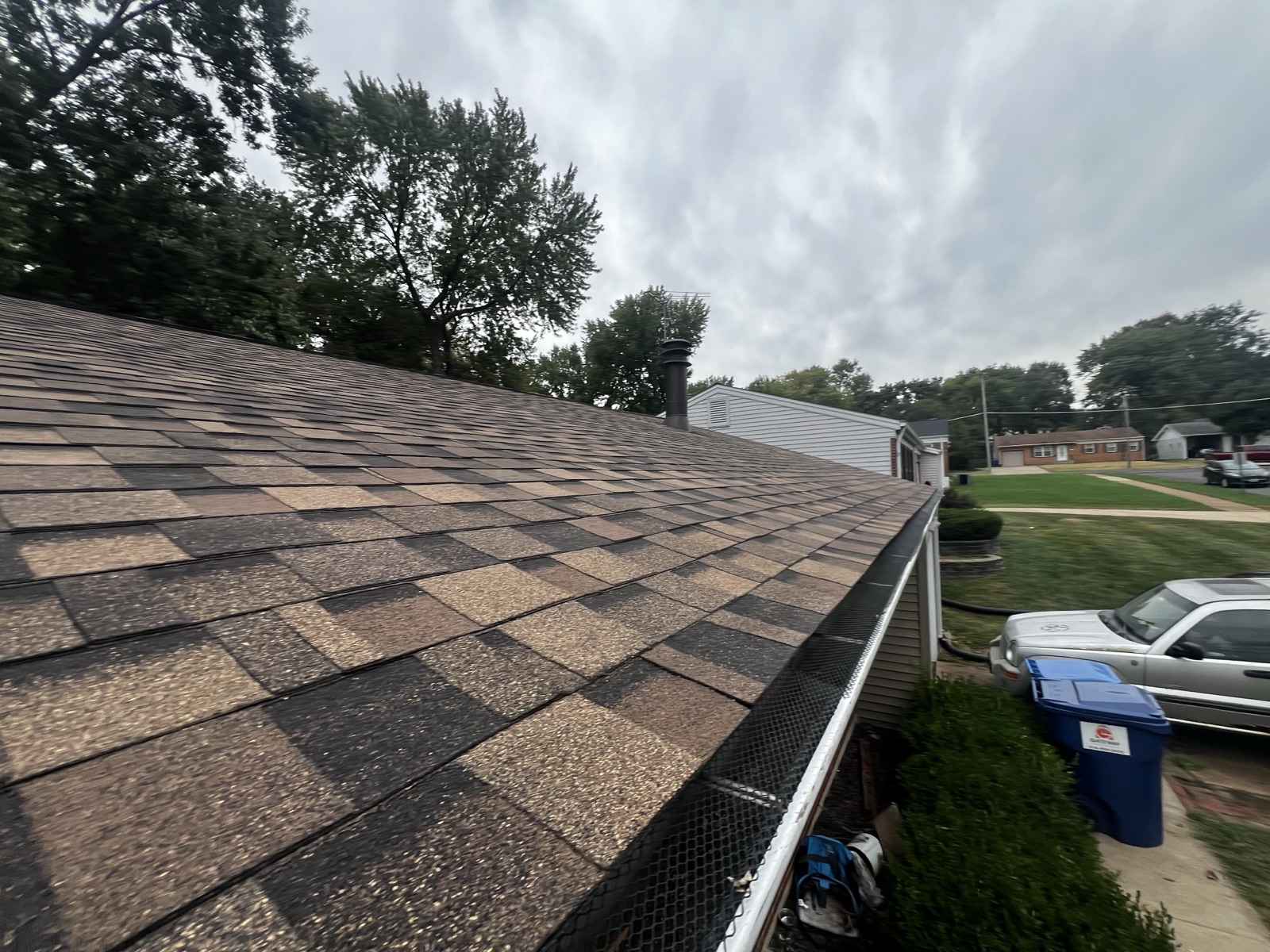
Gutters are softer than shingles and dent easily under hail impact, which makes them a useful indicator even when the roof surface looks fine from below. Walk the gutter line and look for fresh dents, especially clustered dents rather than a single old ding, and check that the gutter is still hanging level and not pulling away from the fascia.

Check Vent Covers and Any Metal on the Roof
Plumbing vent covers, roof vents, and any other exposed metal on the roof deck take hail impact differently than shingles do, and they show it more plainly. If you can see dented or dinged metal fixtures from the ground with binoculars, that is a reasonable signal that the shingles nearby took a comparable hit, even if you can't tell from a distance.
When to Stop Looking and Call Someone
None of this replaces a real inspection. What it does is tell you whether to treat this as routine or urgent. Granule buildup, yard debris, visibly lifted edges, dented gutters, or damaged vent covers are all reasons to get a professional set of eyes on the roof soon rather than waiting for a leak to show up on the ceiling. A roof can look fine from the ground and still have real damage up top, which is exactly why we document everything at close range once we're actually on it.
Think Your Roof Took a Hit?
We inspect roofs across the greater St. Louis area, including Chesterfield, Ladue, Frontenac, Town and Country, Clayton, and Kirkwood.
Or call us directly: (314) 220-2333
Kaleb
Kaleb owns and runs Keys Roofing, serving the greater St. Louis area with roofing, gutter, and downspout work. The company is fully licensed and insured, and Kaleb is on job sites personally, inspecting, documenting, and standing behind the crew's work.