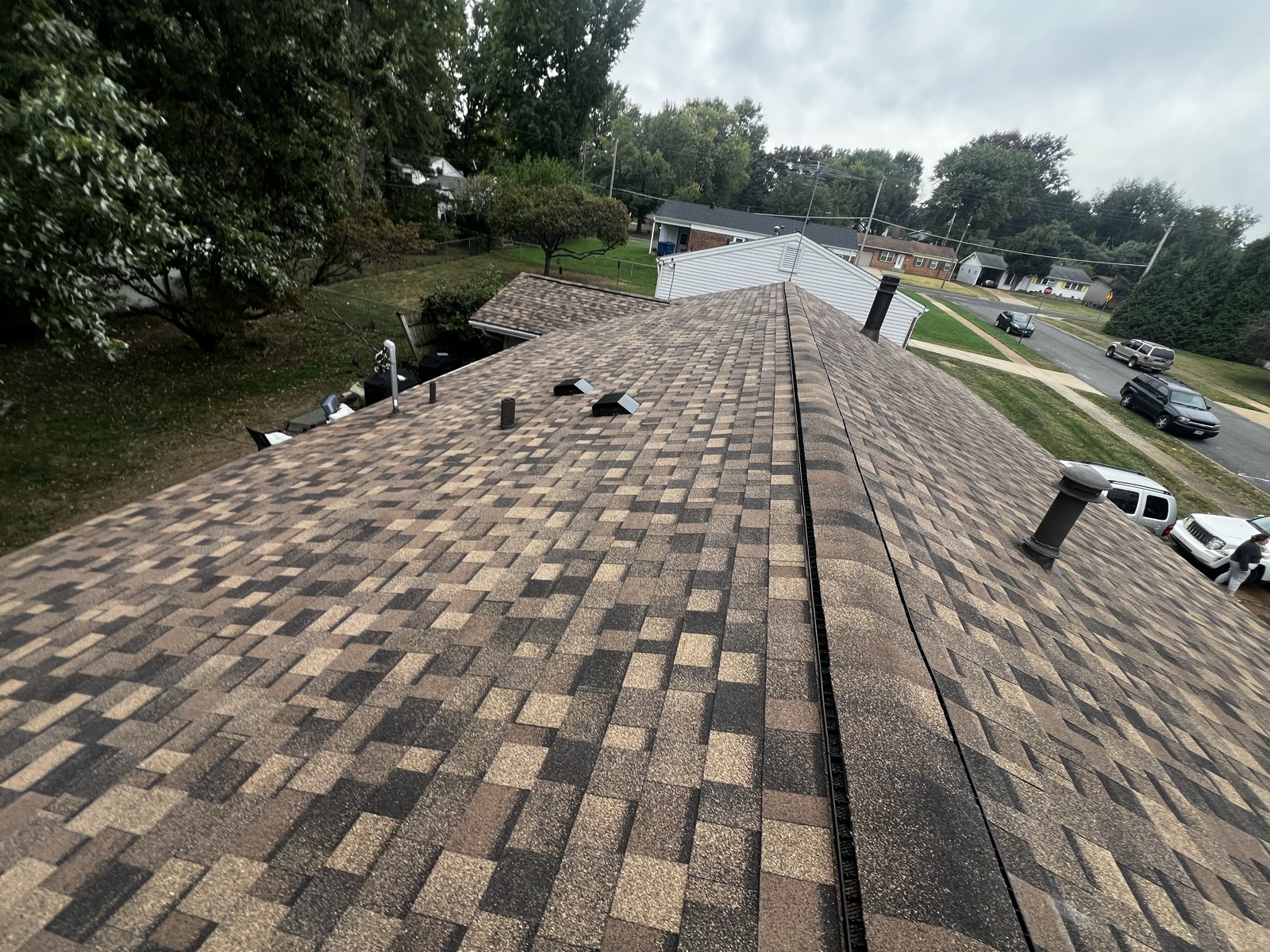
Ventilation is the least glamorous subject in roofing and one of the most important. We have seen shingle roofs age years ahead of schedule, deck boards grow mold, and ice dams tear up eaves, all traced back to the same root cause: an attic that cannot breathe. Here is how the system is supposed to work, in plain terms.
The Principle: Cool Air In Low, Hot Air Out High
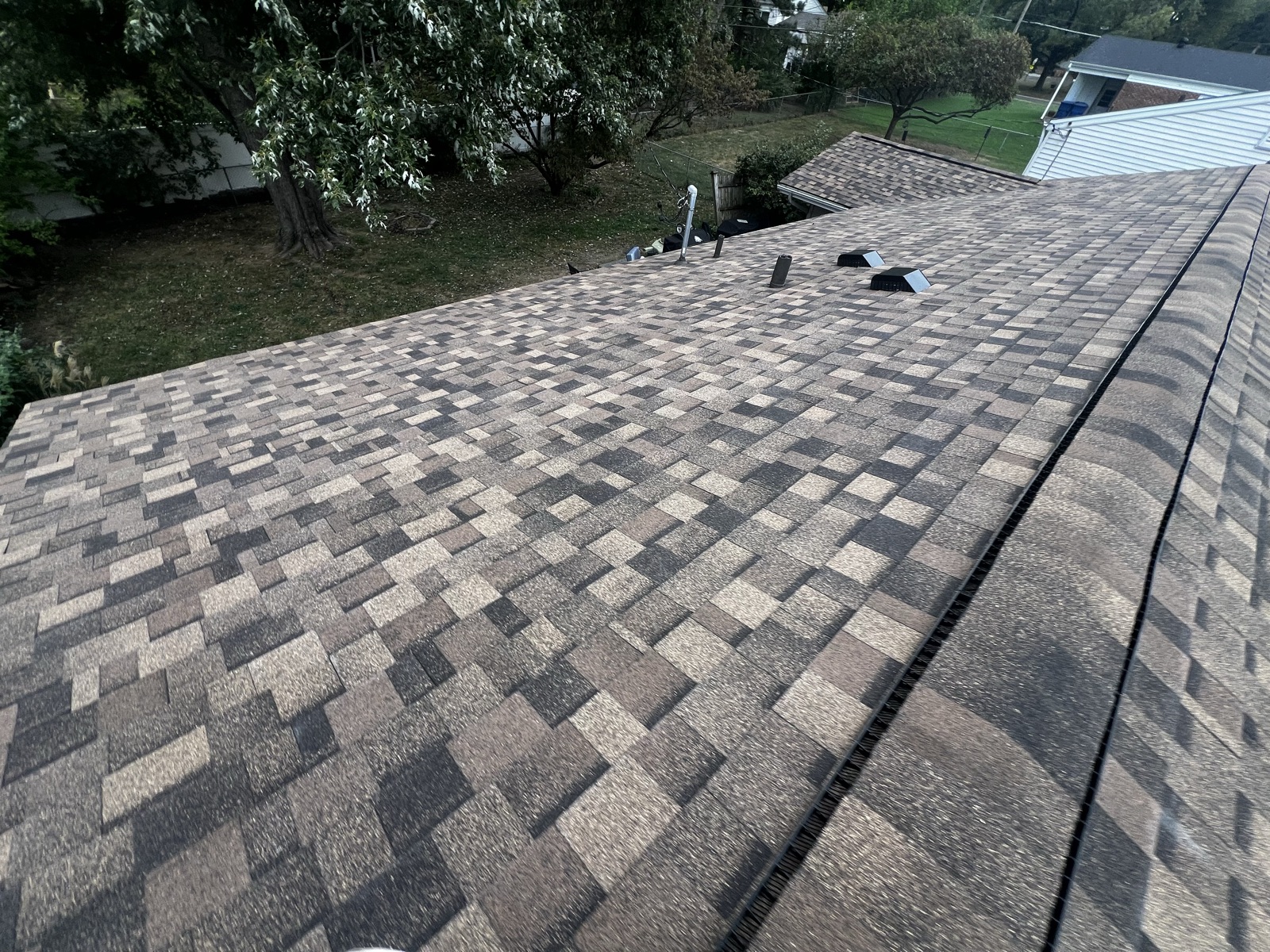
Attic ventilation is a loop. Cooler outside air enters low, through vents in the soffits under your eaves. Warm air rises, as it always does, and exits high, through a ridge vent at the peak or other exhaust vents near it. As long as both ends of that loop are open and roughly balanced, air moves continuously through the attic without a single moving part.
Summer: Heat Is Cooking Your Shingles From Below
In a St. Louis August, an unventilated attic turns into an oven, and that heat does not stay put. It bakes the shingles from underneath while the sun bakes them from above, aging the asphalt from both sides. It also radiates down into your living space, which your air conditioner pays for. A breathing attic sheds that heat continuously instead of storing it.
Winter: Moisture and Ice Dams
Winter is where poor ventilation does its most expensive work. Everyday living pushes warm, moist air up into the attic. Against a cold deck, that moisture condenses, and over a season it feeds mold, rusts fasteners, and soaks insulation. The other winter failure is the ice dam: a warm attic melts the snow on the roof, the meltwater runs down to the cold eaves and refreezes, and the ice ridge that builds there backs water up under the shingles. Ventilation keeps the deck cold and even, which is exactly what prevents the melt-and-refreeze cycle from starting.
The Mistakes We Actually Find
- Blocked soffits. The most common one by far. Blown-in insulation drifts over the soffit vents and chokes off intake. The exhaust vents up top cannot pull air that has no way in.
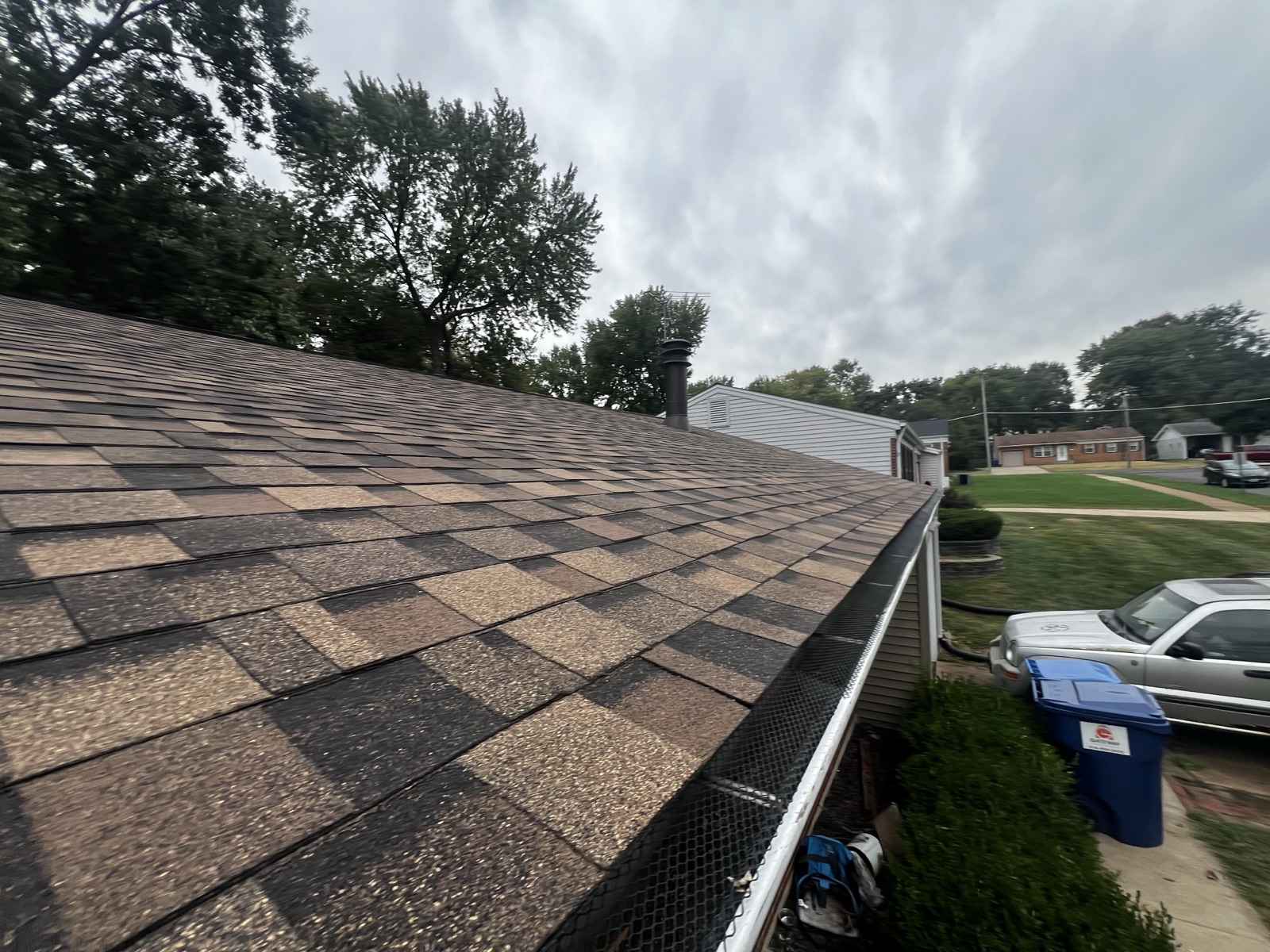
- Painted-shut or undersized soffit vents. Common on older homes around St. Louis that have been painted many times over the decades.
- Mixed exhaust types. A ridge vent combined with box vents or a powered fan on the same attic space can short-circuit the loop, pulling air from the nearest opening instead of from the soffits, and in some cases pulling weather in with it.
- Bath fans venting into the attic. A bathroom exhaust duct that dumps into the attic instead of outside is a moisture machine pointed at your roof deck.
Signs Your Attic Is Not Breathing
From inside the house: a second floor that will not cool down in summer, frost on the underside of the roof deck on cold mornings, rusty nail tips in the attic, or a musty smell up there. From outside: ice dams and long icicle rows at the eaves every winter, and shingles that look older than their age. None of these is proof by itself, but any of them is reason to have the loop checked.
How We Handle It
Ventilation is part of every inspection we run, not an add-on. We check that intake exists and is actually open, that exhaust matches the attic it serves, and that the two are in reasonable balance, because manufacturer warranties and the roof's lifespan both depend on it. If the ventilation on your roof is wrong, we will show you photos of exactly what is wrong and what fixing it looks like. It is often one of the cheapest corrections on the whole roof relative to how much damage it prevents.
Not Sure Your Attic Is Breathing Right?
We evaluate ventilation as part of every inspection across the greater St. Louis area, from Chesterfield and Ladue to Frontenac, Town and Country, Clayton, and Kirkwood.
Or call us directly: (314) 220-2333
Kaleb
Kaleb owns and runs Keys Roofing, serving the greater St. Louis area with roofing, gutter, and downspout work. The company is fully licensed and insured, and ventilation gets checked on every roof Keys inspects.