When homeowners start researching a new roof, the first fork in the road is usually architectural versus three-tab shingles. There is a lot of marketing noise around this question, so here is the installer's version: what the two actually are, how they behave differently on a roof in Missouri weather, and our honest take on when each one makes sense.
What Each One Actually Is
A three-tab shingle is a single flat layer of asphalt shingle with two slots cut into it, creating three even tabs. Every shingle is the same shape, the same thickness, and lays flat, giving the roof a uniform, repeating grid pattern. This was the standard residential shingle for decades, and there are plenty of them on roofs around St. Louis right now.
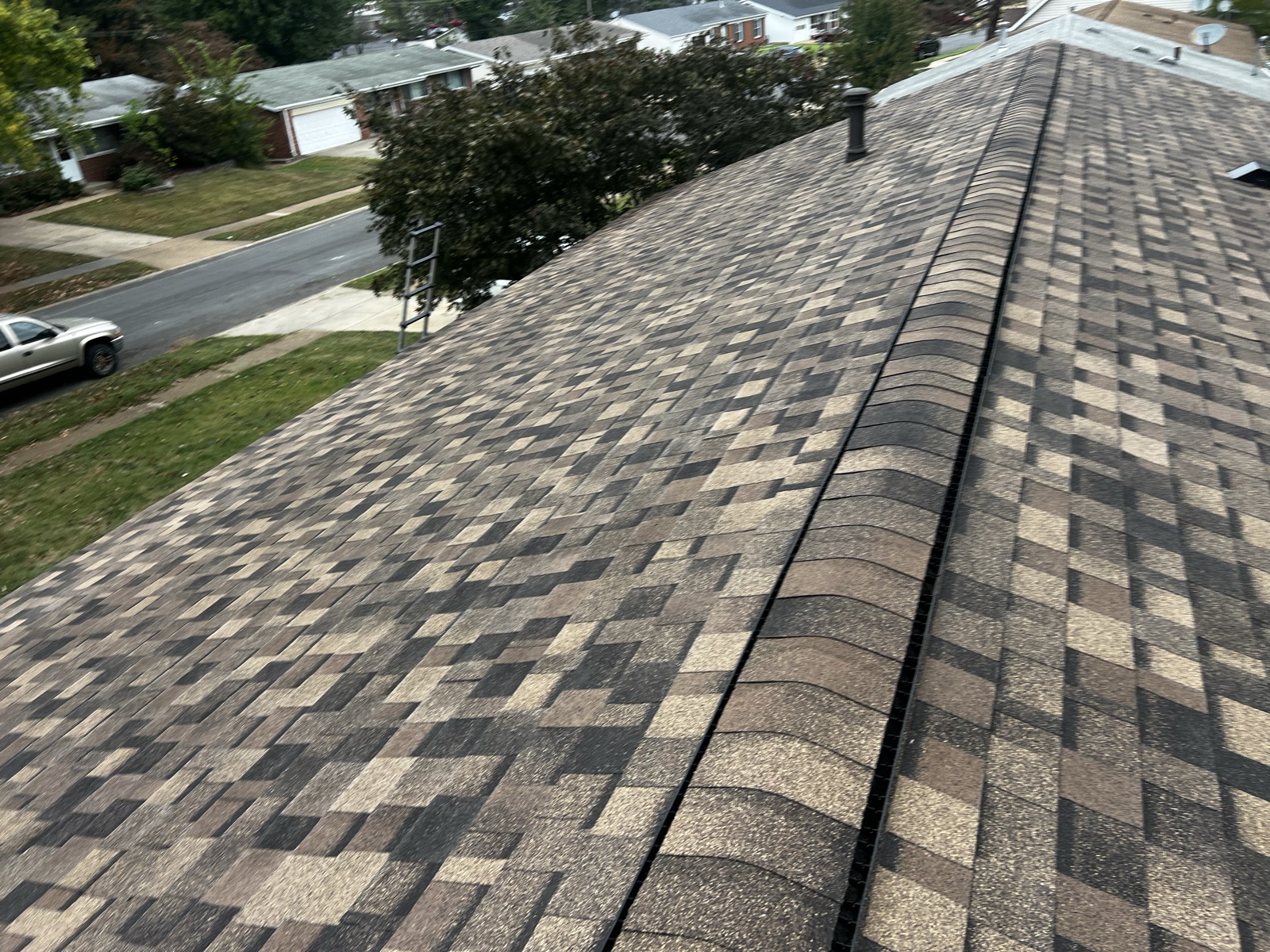
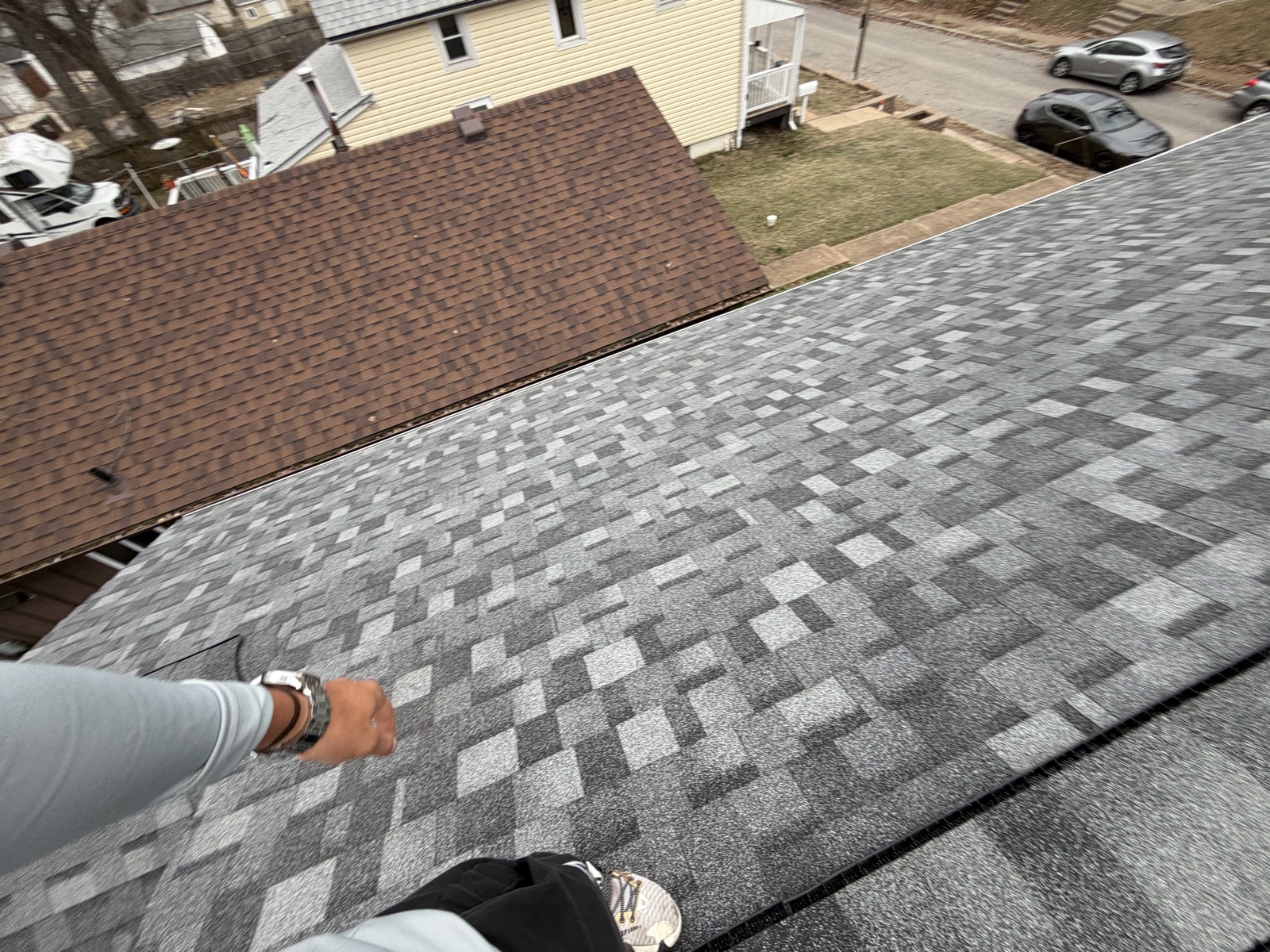
An architectural shingle, also called dimensional or laminate, is built from two or more layers of shingle material bonded together, with tabs applied in a staggered pattern. The result is a thicker, heavier shingle with a varied, textured profile rather than a flat grid.
How They Behave in Missouri Weather
The construction difference is not cosmetic. Those cut slots in a three-tab create long, exposed tab edges, and wind works on edges. When a storm gets under a three-tab, the tab creases, folds back, or tears at the slot. An architectural shingle presents a heavier, laminated assembly without through-slots, which generally gives it stronger wind ratings and better resistance to the freeze-thaw cycling St. Louis puts a roof through every winter. As always, the rating that applies to any specific product depends on the line and the fastening pattern used, which is a spec-sheet conversation we are glad to have, the same way we explained in why we install Atlas and Malarkey.
Looks and Longevity
On looks, the difference is easy to see from the curb. Three-tab reads as a flat grid. Architectural reads as texture and shadow lines, closer to the look of wood shake, and it is what most buyers in this market now expect on a home. On longevity, manufacturer warranty terms generally run meaningfully longer on architectural lines than on three-tab lines, which tells you how the manufacturers themselves rate the two constructions. The exact terms belong to each product's current documentation, not to a blog post.
So When Does Three-Tab Still Make Sense?
Honestly, in fewer cases every year, but there are real ones: matching an existing three-tab roof on a partial repair, short-horizon situations like a property being prepared for sale where budget rules, and some outbuildings. What we will not do is put the cheaper shingle on your house without telling you plainly what you are trading away for the savings, because you are trading something: wind performance, warranty length, and curb appeal.
Our Honest Take
For a home you plan to live in, in a metro that sees real wind and hail every year, architectural is the recommendation we make almost every time, installed to the manufacturer's fastening spec so it keeps the rating it was tested for. If your budget is pushing you toward three-tab, tell us. There are usually better places to economize on a roofing project than the shingle itself, and we would rather find those with you than watch a storm find the tabs.
Deciding on Shingles for Your Roof?
We install roofs across the greater St. Louis area, from Chesterfield and Ladue to Frontenac, Town and Country, Clayton, and Kirkwood, and we will give you a straight recommendation.
Or call us directly: (314) 220-2333
Kaleb
Kaleb owns and runs Keys Roofing, serving the greater St. Louis area with roofing, gutter, and downspout work. The company is fully licensed and insured, and Kaleb is directly involved in material selection on every project.