
Ask a homeowner where roofs leak and they will point at the shingles. Ask a roofer and they will point at the flashing. The shingle field itself, laid properly, sheds water reliably for decades. Where roofs actually let water in is at the interruptions: the chimney, the wall, the valley, the pipe. Every one of those spots depends on metal flashing, and flashing is where corners get cut, because it is fussy work in places nobody can see from the ground.
What Flashing Actually Does
Flashing is not a sealant and it is not glue. It is shaped metal that overlaps with the roofing and the thing the roof runs into, arranged so gravity carries water over each joint instead of into it. Good flashing does not rely on any adhesive to keep water out. It relies on physics: water runs downhill, and every piece of metal is layered so downhill always leads outside. That is why flashing done right lasts as long as the roof, and why a bead of caulk pretending to be flashing lasts a couple of summers at best.
Chimneys: Step Flashing and Counter Flashing
The chimney is the classic leak point, and it is protected by a two-part system. Step flashing is a series of bent metal pieces, one woven into every course of shingles along the chimney's side, each one overlapping the one below like the shingles themselves. Counter flashing is the second layer, set into the chimney's mortar joints and lapped down over the top edge of the step flashing, so water running down the brick face never reaches the step flashing's vulnerable upper edge.
When we find a chimney "flashed" with a smear of roofing tar or a surface-glued strip of metal, we know exactly what the last contractor skipped, and we usually know why the ceiling below it has a stain.
Walls and Dormers
Anywhere a roof slope dies into a vertical wall, the same step-flashing logic applies along the run, with kick-out flashing at the bottom to throw the collected water into the gutter instead of letting it run down inside the wall. A missing kick-out is a slow, hidden leak that shows up years later as rotted sheathing behind the siding. It is a small piece of metal that prevents thousands of dollars of quiet damage.
Valleys
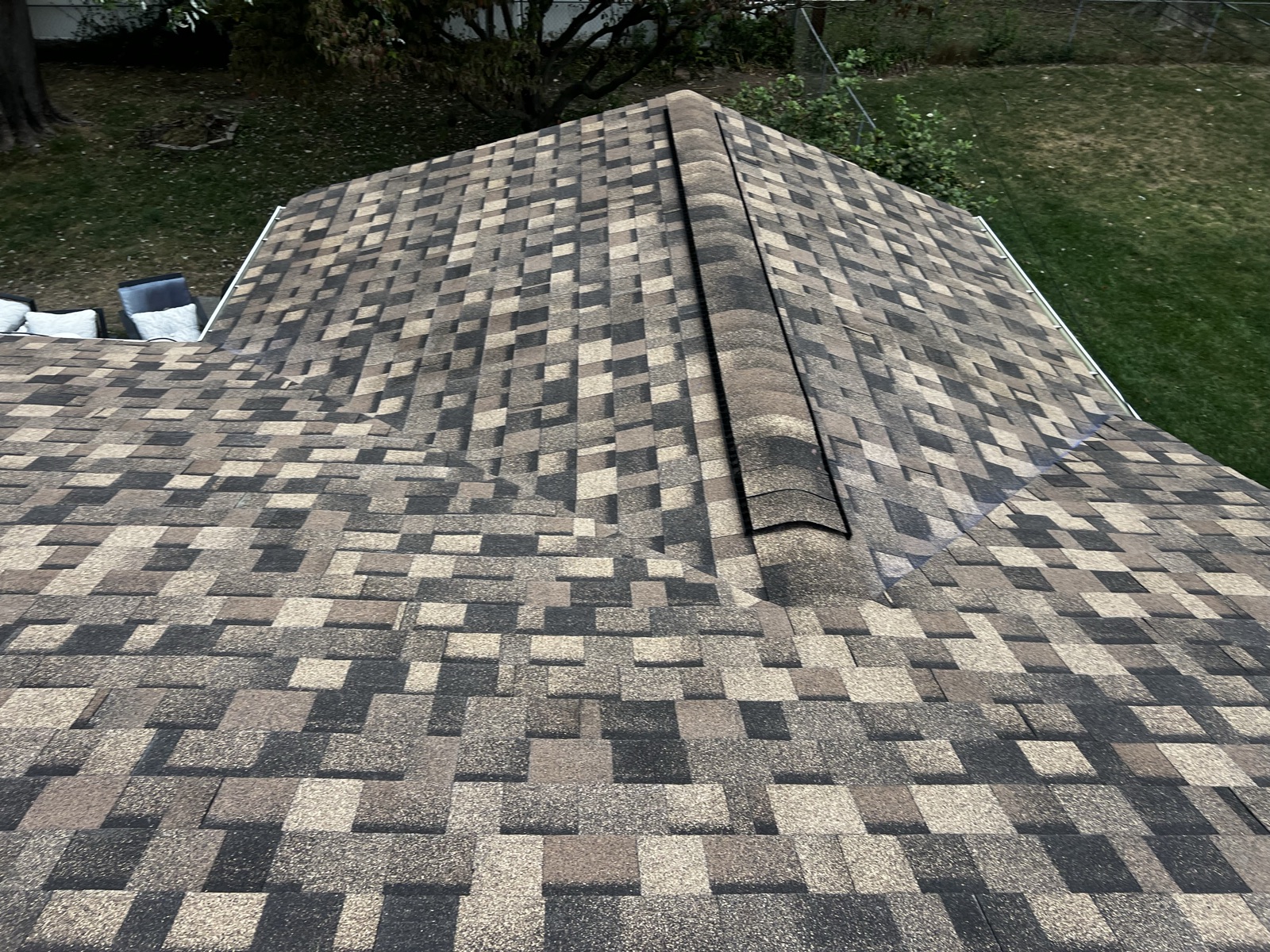
A valley is where two slopes drain into one channel, which makes it the highest-traffic waterway on the roof. Valleys are protected by metal or membrane under the shingle courses, and the shingles are cut or woven over that liner in a specific pattern. We covered how we inspect them in how we inspect a roof. What matters for this post: debris that sits in a valley dams the channel and pushes water sideways under the shingle edges, which is why valley condition is a standing item on every inspection we run.
Pipe Boots: The Quiet Early Failure
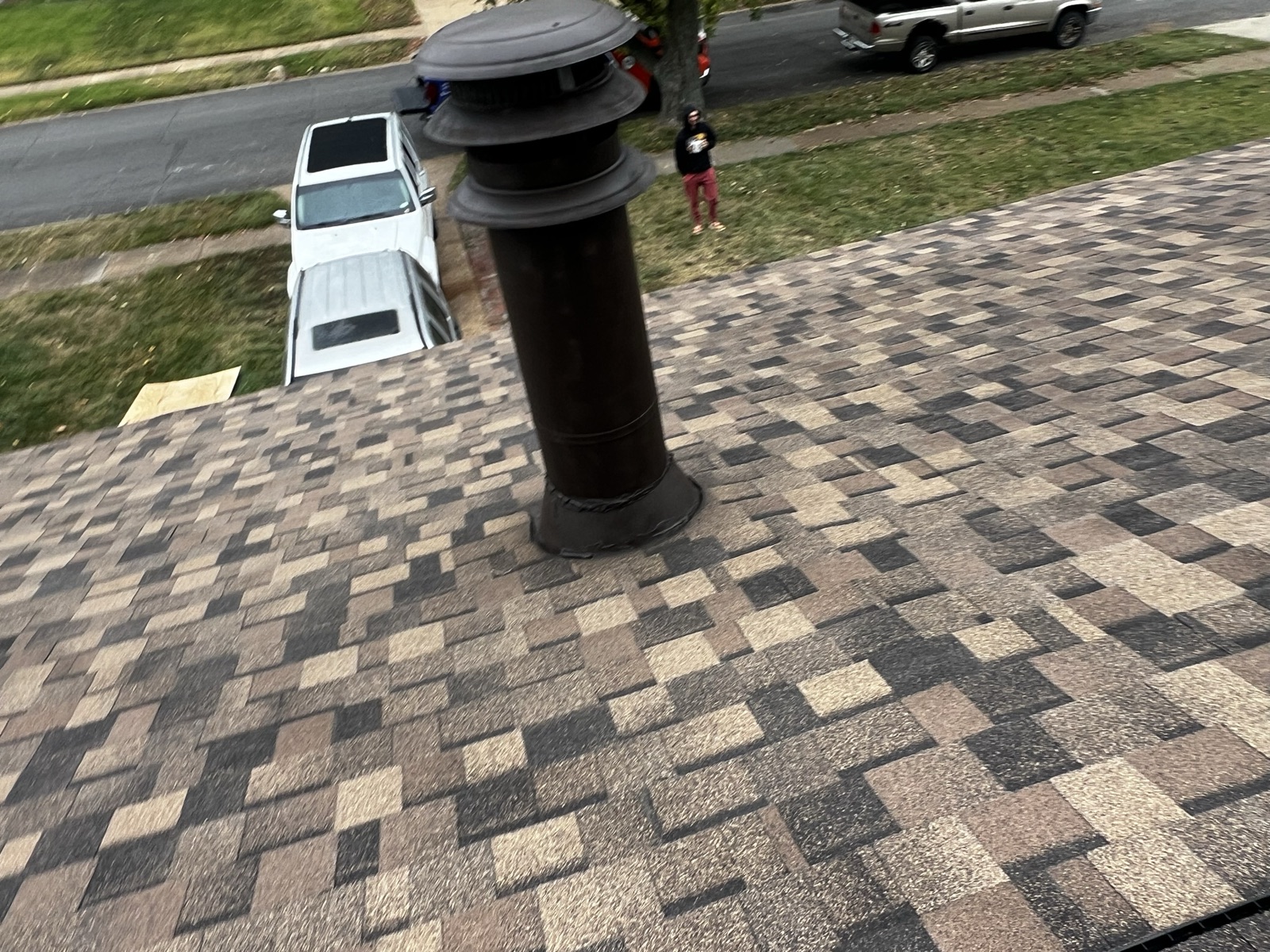
Every plumbing stack through the roof wears a boot: a flashing base with a flexible collar that grips the pipe. The metal base commonly outlives the roof, but the collar is rubber or plastic sitting in direct sun, and it dries, cracks, and splits years before the shingles are done. A split boot leaks straight down the outside of the pipe into the house, slowly, often for a long time before anyone sees a stain. It is one of the cheapest parts on the roof and one of the most common sources of the leaks we get called about.
Why Caulk Is Not a Repair
You will meet contractors whose answer to every flashing problem is a caulk gun. Sealant has legitimate small jobs on a roof, but it is a supporting player, never the system. Caulk shrinks, dries, and releases in the same sun that kills pipe boot collars, and when it fails, it fails invisibly. If the fix you are being sold for a chimney or wall leak is caulk alone, you are buying the same leak again in a couple of years. The honest repair is metal, layered correctly, and it is the only kind we install.
The Takeaway
When you think about your roof's health, think past the shingle field. The chimney, the walls, the valleys, and the boots are where the water gets in, and they are exactly the details a fast, cheap job skips because they take time and skill. It is also why our inspections photograph every one of these points individually. If your roof has a leak nobody can find, the flashing is where we start looking, and we will show you photos of exactly what we find.
Chasing a Leak Nobody Can Find?
We track leaks to their source and document the fix across the greater St. Louis area, from Chesterfield and Ladue to Frontenac, Town and Country, Clayton, and Kirkwood.
Or call us directly: (314) 220-2333
Kaleb
Kaleb owns and runs Keys Roofing, serving the greater St. Louis area with roofing, gutter, and downspout work. The company is fully licensed and insured, and flashing details get Kaleb’s personal attention on every installation.