
We wrote before about why gutters and downspouts are the most ignored part of the roof. This post is the practical follow-up: the specific checklist we recommend for St. Louis homes every fall, before the oaks and maples drop their load and the first hard freeze arrives behind them.
The reason fall matters so much here is simple. Leaves fill the gutters in October and November, then winter arrives while they are still full. A clogged gutter in a freeze becomes a block of ice, and ice is heavy, expands, and backs meltwater up under the shingle edge. Most of the gutter damage we repair in spring was set up the previous fall.
Clean Late, and Maybe Twice
The most common mistake is cleaning too early. Clear your gutters in early October and the trees will refill them by Thanksgiving. For most St. Louis yards, the main cleaning belongs after the bulk of the leaves are down, typically late November into early December, before the first extended freeze. If your lot is heavily treed, plan on twice: once mid-season so the gutters keep working through the fall rains, and once at the end to go into winter empty.
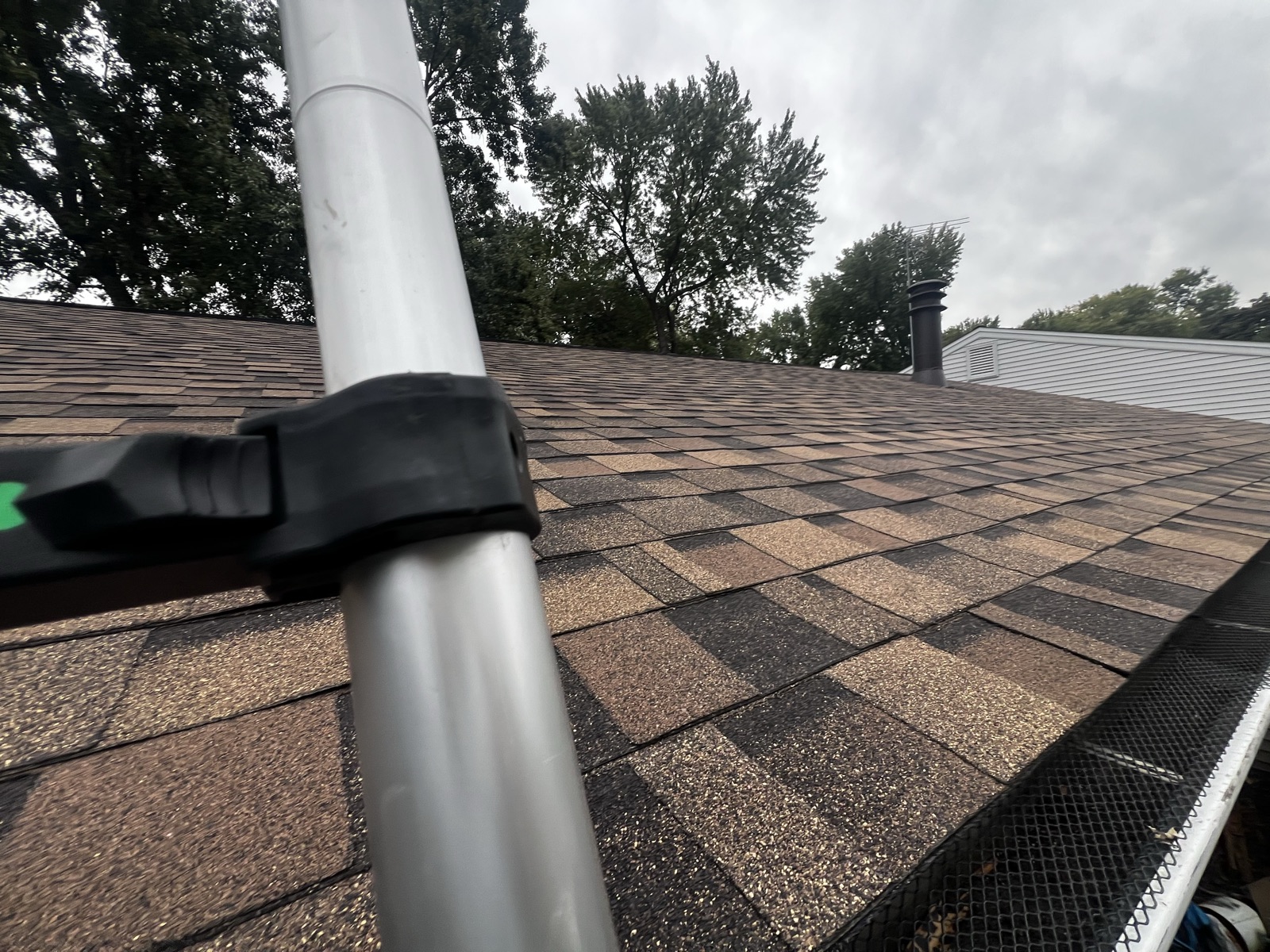
Check Pitch and Hangers While They Are Empty
An empty gutter is the time to look at the run itself. Sight down the gutter: it should fall gently and continuously toward the downspout, with no bellies where water sits. Standing water after a rain is the tell. Then look at the hangers. Years of water weight, ice, and ladder pressure work hangers loose, and a gutter that has started pulling away from the fascia will finish the job under its first load of ice. Refastening hangers in the fall is a minor task. Rehanging a torn-off gutter run in February is not.
Seams, End Caps, and Corners
On sectional gutters, the seams are where leaks start, and every corner and end cap is a seam. Look for drip stains, rust streaks, or tiger-striping on the gutter face below joints. On any gutter, check the corners for daylight. Small seam leaks drip onto fascia and soffit wood all winter, and that is how a twenty-dollar seal job becomes a carpentry project.
Follow the Water All the Way Down
The downspout is the half of the system everyone forgets. Run water down each one, or just watch during the next rain: does it actually discharge, and where? A downspout that dumps at the foundation is delivering the entire roof's water to the one place it does the most harm. Extensions and splash blocks are cheap. Foundation and basement water problems are not. While you are down there, confirm the discharge path will not become an ice sheet across a walkway when the temperature drops.

Look Up While You Are At It
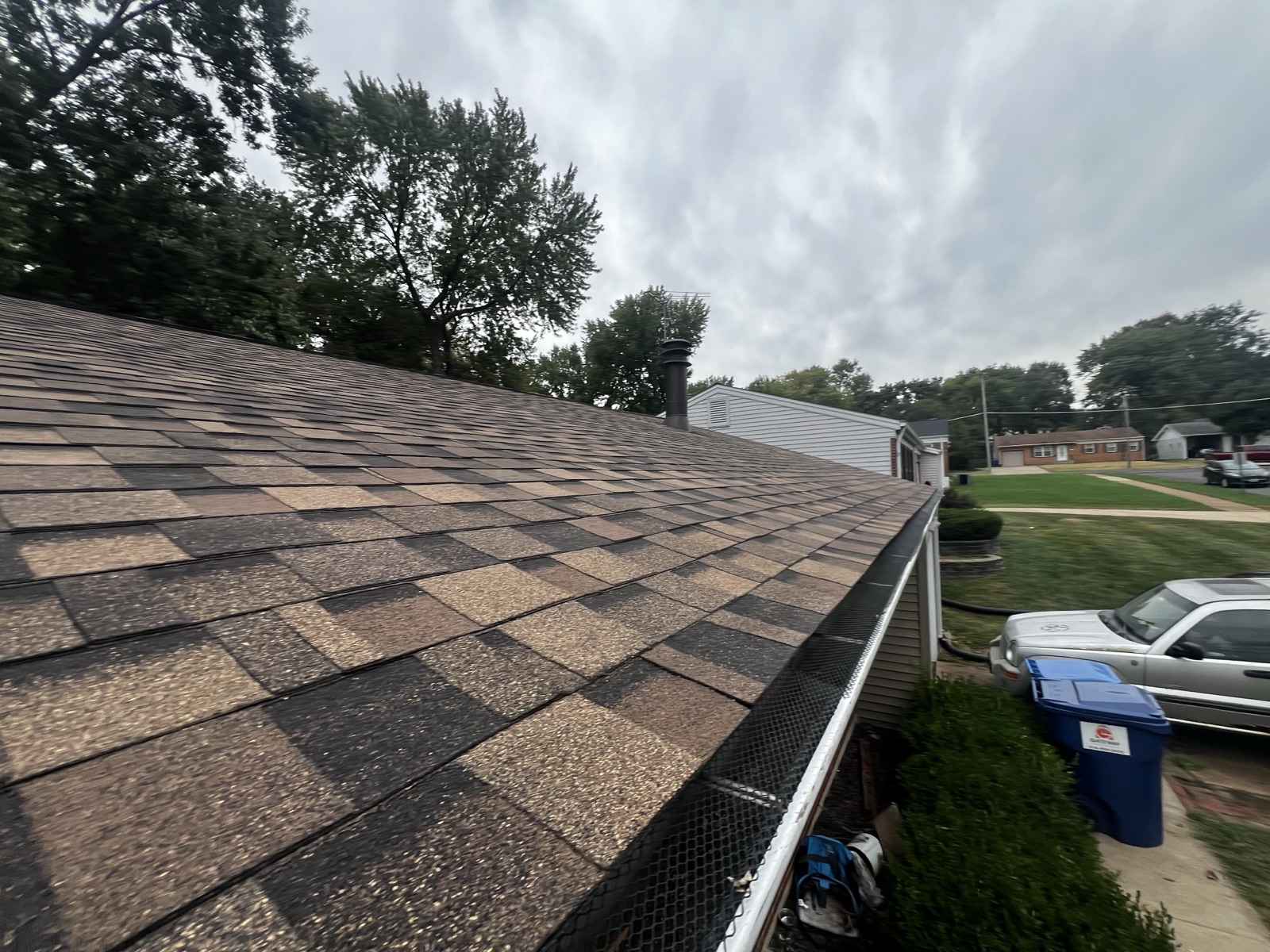
Fall is also the moment to glance at the roof itself, because the same ladder covers both jobs. Debris sitting in the valleys, limbs touching the shingles, and anything that came loose over the summer should come off or get fixed before winter locks the roof away for three months. Our storm-prep post covers what to look for from the ground.
A Word on Safety, and on Having Us Do It
Every fall, ladders hurt a lot of homeowners. If your gutters are above the first story, if the ground is soft or sloped, or if you are not completely comfortable on a ladder, this is a job worth handing off, and we mean that as safety advice, not a sales line. If you would rather have it done right without leaving the ground, call us. We clean, refasten, reseal, and document the condition of the whole system with photos, the same way we document a roof, and we will tell you plainly if anything actually needs repair or if you are good until spring.
Want Your Gutters Ready Before the Leaves Land?
We install, repair, and maintain gutters and downspouts across the greater St. Louis area, from Chesterfield and Ladue to Frontenac, Town and Country, Clayton, and Kirkwood.
Or call us directly: (314) 220-2333
Kaleb
Kaleb owns and runs Keys Roofing, serving the greater St. Louis area with roofing, gutter, and downspout work. The company is fully licensed and insured, and gutters get the same documentation standard as every roof Keys touches.