Most people say "roof" and mean shingles. But shingles are just the visible layer of a system with half a dozen components underneath, and when a roof fails early, the failure usually traces to one of the parts you cannot see from the street. When we quote a roof, every one of these layers is in the conversation. Here is the whole system, from the wood up.
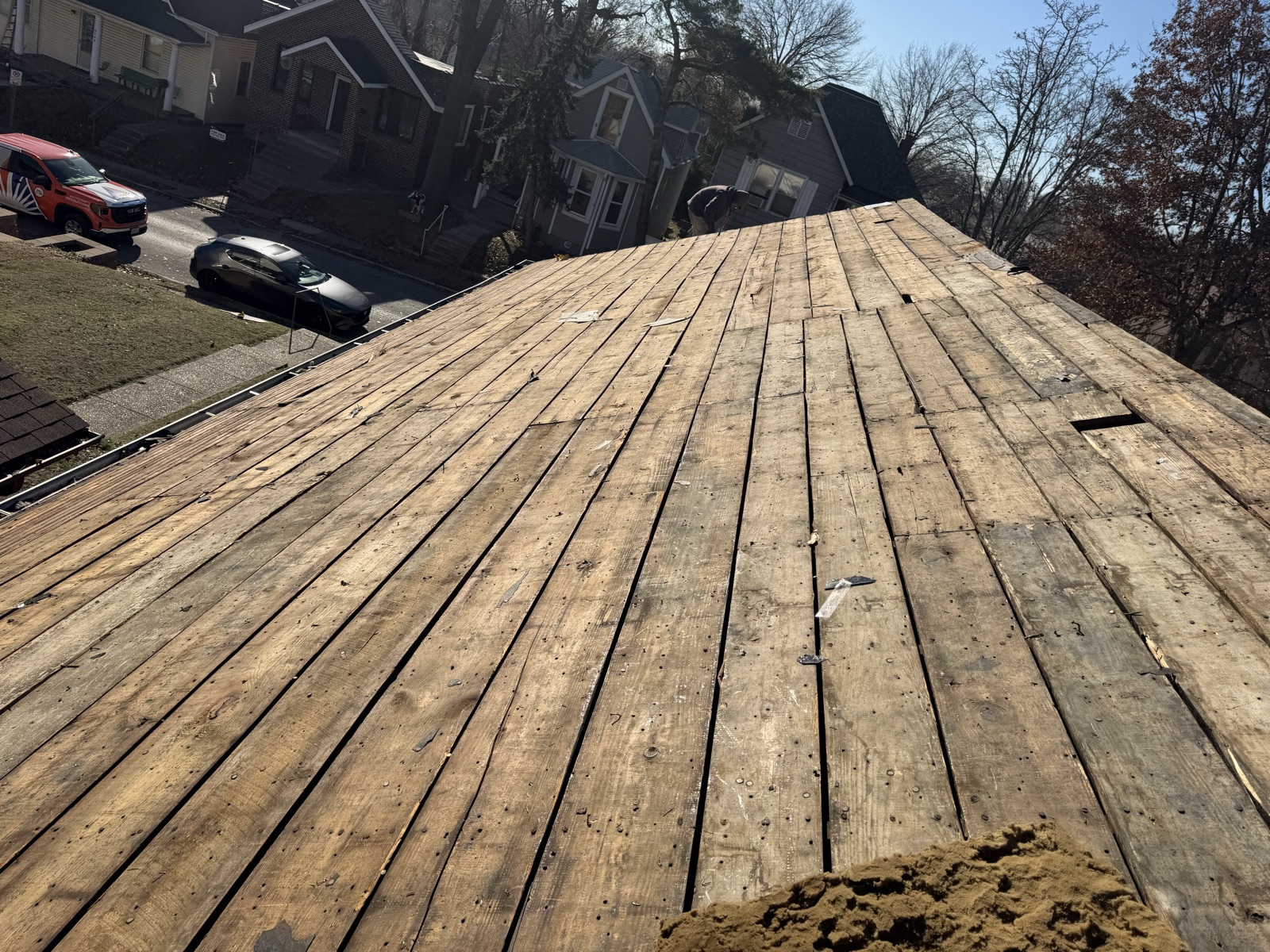
The Deck: What Everything Is Nailed To
The deck is the wood surface, plank or panel, that carries the whole system. Every nail in your roof holds because the deck holds. Soft, rotted, or delaminated decking does not hold fasteners properly, which is why we check the deck at tear-off on every job and replace what is compromised before anything goes back on. Covering bad decking with new shingles is one of the classic shortcuts of this industry, and it is one we refuse to take.
Ice and Water Barrier: The Sealed Zones
At the eaves, in the valleys, and around penetrations, a self-adhering membrane goes down first. Unlike underlayment, it bonds to the deck and seals around nails driven through it. This is the layer that protects the roof's most vulnerable zones when water backs up, which in Missouri usually means ice damming at the eaves in winter or debris damming a valley in a heavy storm.
Underlayment: The Second Line of Defense
Across the rest of the deck goes underlayment, most commonly a synthetic sheet these days. If wind ever lifts a shingle or drives rain sideways under an edge, the underlayment is what stands between that water and your decking. It is a layer nobody sees and nobody should skimp on.
Drip Edge and Starter Course: The Edges Done Right
The drip edge is the metal at the roof's perimeter that kicks water off the edge and into the gutter instead of letting it wick behind the fascia. The starter course is a purpose-made first row of shingle material at the eave and rake that puts a sealed, straight edge under the first visible course. Both are small line items that show up missing on cut-rate jobs, and both are places where wind and water start their damage when they are absent.
Shingles: The Weather Surface
Now the layer everyone pictures. The shingles take the sun, the hail, and the wind, and shed water down the slope, each course overlapping the one below. Which shingle, and how it is fastened, matters enormously, and we covered our take in architectural versus three-tab and why we install Atlas and Malarkey.
Flashing: Where the Roof Meets Everything Else
Everywhere the shingle field is interrupted, by a chimney, a wall, a valley, a pipe, metal flashing carries the water past the interruption. Flashing failures cause a huge share of the leaks we chase, enough that we gave flashing its own post.
Ridge: Cap and Ventilation
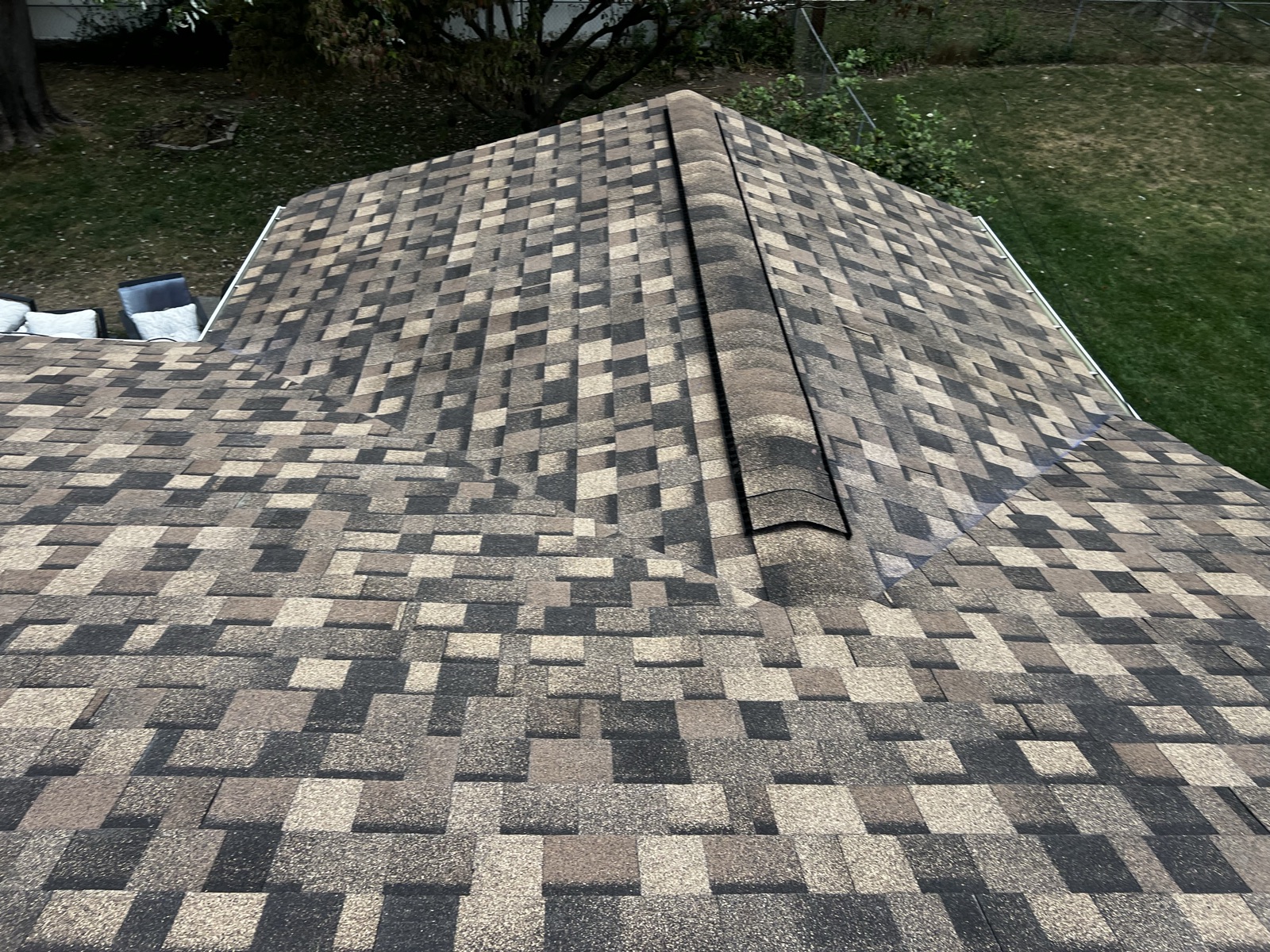
At the peak, ridge cap shingles close the system, and on most modern roofs a ridge vent runs underneath them, exhausting hot, moist air from the attic. Ventilation is the component that protects the roof from the inside, and it earns its own explanation in our post on attic ventilation.
Why the System View Matters
Here is the practical takeaway. When you compare roofing quotes, the shingle line is where everyone looks, but the difference between a roof that lasts and one that leaks in five years usually lives in everything else on this list. Ask any bidder what their quote includes for ice and water coverage, underlayment, drip edge, starter, flashing, and ventilation. If those answers are vague, the price is not really lower. It is just missing parts.
Want to Know What Is Actually on Your Roof?
We inspect and document full roof systems across the greater St. Louis area, from Chesterfield and Ladue to Frontenac, Town and Country, Clayton, and Kirkwood.
Or call us directly: (314) 220-2333
Kaleb
Kaleb owns and runs Keys Roofing, serving the greater St. Louis area with roofing, gutter, and downspout work. The company is fully licensed and insured, and Kaleb holds every installation to the full-system standard described here.