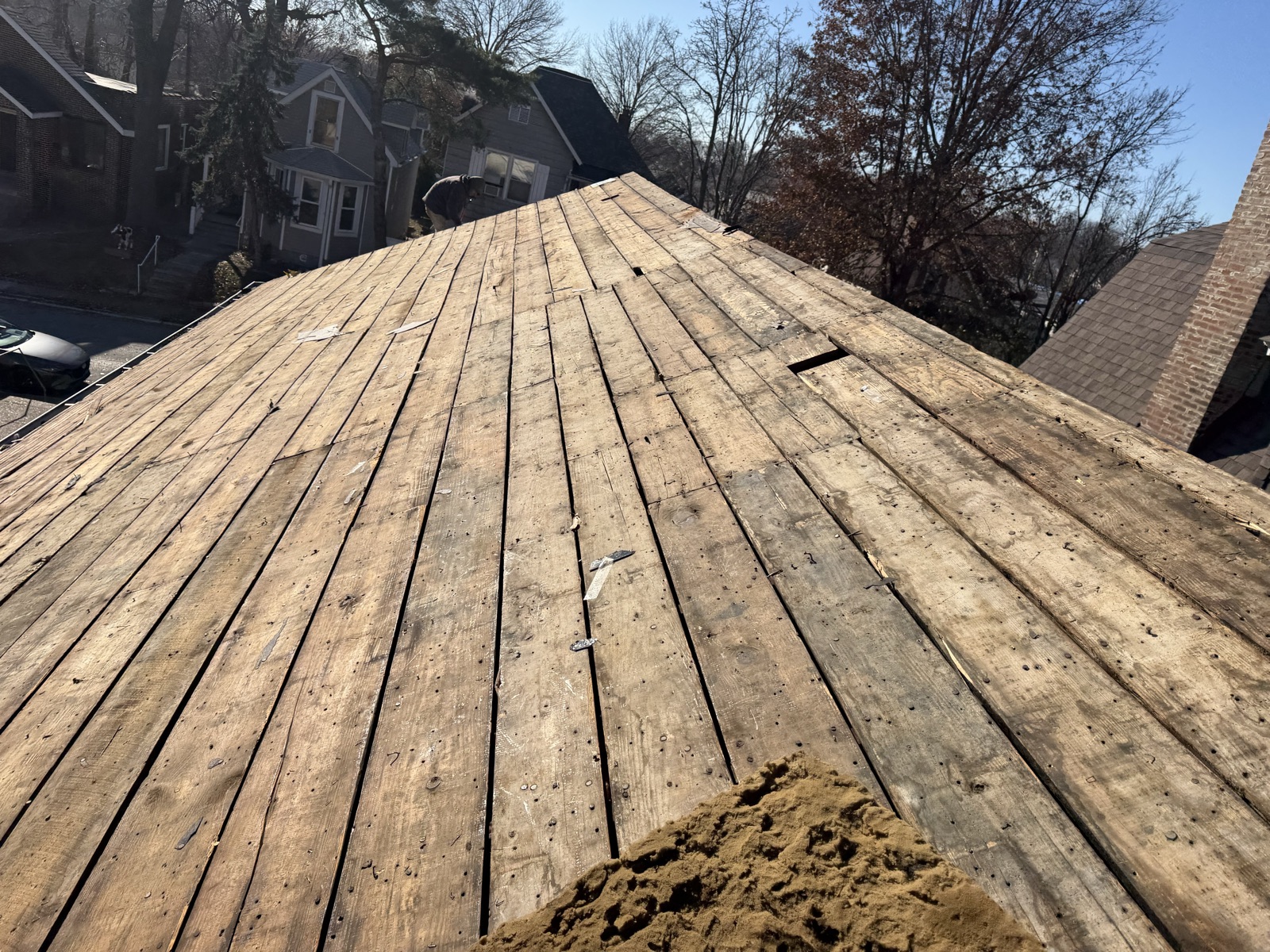
Every fall, somebody tells me some version of the same sentence: "It only drips when the rain blows in from the west, so we are going to deal with it in the spring." I understand the thinking. The stain on the ceiling is small, the bucket in the attic works, and the holidays are expensive. But I have torn off enough roofs in March and April to know what that decision actually costs, because the tear-off shows us exactly what happened up there while everyone was waiting for spring. So let me walk you through what a small leak does to the wood underneath your shingles over one Missouri winter, month by month.
First, the thing to understand: the leak you can see is not the problem. The drip in the bucket is water that made it all the way through. The damage happens in the layers it passes through on the way, and most of it happens to the decking, the wood panels that everything else on your roof is fastened to. We covered where decking sits in the system in the anatomy of your roof. It is the foundation of the whole assembly, and unlike shingles, it does not shed water. It absorbs it.
November: The Drip You Decided to Watch
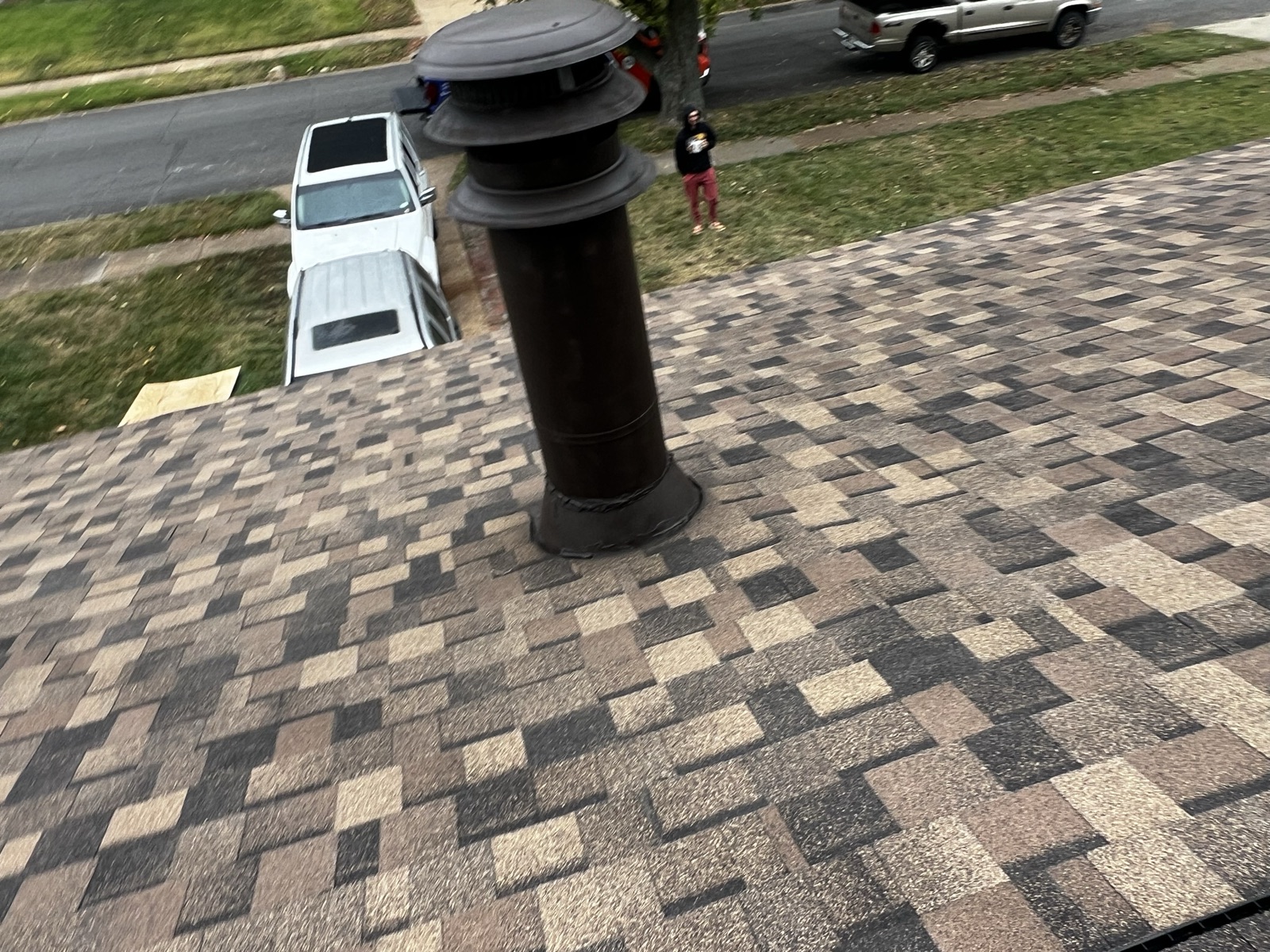
Most small leaks start at a detail, not in the middle of a shingle field. A cracked pipe boot, a lifted piece of step flashing, a nail that backed out, a gutter seam dumping water where it should not. We wrote about why in flashing: where roofs actually leak. In November, water is following that path in small amounts during rain, and the wood around the entry point is getting wet, then partially drying between storms. Wood can survive some of that. What it cannot survive is what comes next, because from here on the drying part of the cycle starts disappearing.
December and January: The Freeze-Thaw Engine Starts
A St. Louis winter rarely just freezes and stays frozen. It freezes, thaws, rains, freezes again, sometimes inside the same week. That swing is the most destructive weather pattern a wet roof gets, for two reasons.
- Water expands when it freezes. Moisture that has soaked into the wood fibers and into the seams between panels freezes and expands, then thaws and lets go, over and over. Every cycle pries the wood apart a little more. Plywood decking delaminates: the thin layers it is glued from begin to separate and the panel loses its strength. OSB, the pressed-strand panel on most newer homes, swells at the edges and starts shedding strands. Neither one heals when it dries.
- Ice holds water on the roof. A leak path that only saw water during a rainstorm now sits under snow that melts a little every sunny afternoon and refreezes every night. Instead of an hour of exposure per storm, the entry point gets fed slowly for days at a time. This is the same melt-and-refreeze mechanic that builds ice dams at the eaves, which we covered in our ventilation post, and it means winter leaks run on a schedule that has nothing to do with the weather forecast.
February: What Is Happening That You Cannot See
By late winter, the area around the leak is a different piece of wood than it was in the fall. The panel is staying damp between events instead of drying out. Damp wood in an enclosed attic is exactly what mold and rot fungi want, and a cold attic slows them down without stopping them, especially on the warm days. Fasteners in the wet zone are rusting, and shingle nails hold by friction against wood fiber, so as the fibers around them soften and swell, the nails hold less. Insulation below the leak has been catching the overflow and compressing, and wet insulation barely insulates, which makes the attic warmer, which feeds the melt-and-refreeze cycle harder. Everything in that chain makes everything else in it worse. That is the real reason waiting is expensive: the damage is not adding up, it is compounding.
Spring: The Bill Comes Due
Here is the difference between the two repairs, and this is the honest math without pretending I can quote your roof from a blog post. The November version of this job is usually a detail repair: reseat or replace a boot, correct a piece of flashing, and confirm the wood below got a chance to dry. The spring version of the same leak is often that same detail repair plus cutting out and replacing decking that can no longer hold a fastener, plus addressing whatever grew on it, plus interior work if the ceiling stain spread. Same original problem. The scope grew because the wood spent a winter wet, and decking replacement means opening up the roof above it to do it right. There is no shortcut where soft deck gets shingled over, at least not on our jobs. Shingles fastened to compromised wood are a wind claim waiting to happen, and as we said in our warranty post, workmanship like that is exactly what voids coverage.
How to Catch This Before Winter Does
You do not need to get on the roof. The signals are visible from inside and from the ground:
- Any ceiling stain, even a faint one, that appears or grows after rain. Water travels along framing before it drops, so the stain is rarely directly under the entry point, but it is always evidence.
- A musty smell in the attic, or dark streaks on the underside of the deck if you poke your head up there with a flashlight.
- Granules, lifted shingles, or flashing that looks disturbed after a storm, which we covered in reading your roof after a storm.
- Daylight visible in the attic anywhere other than at vents.
If any of those is true at your house right now, the cheapest time to deal with it is before the first hard freeze. We inspect and photograph the whole roof, show you exactly what we found, and tell you straight whether it needs a repair now or can genuinely wait. Sometimes it really can wait, and we will say so. But that call should be made from photos of your actual roof, not from a bucket that does not look that full yet.
Got a Drip You Have Been Watching?
We inspect and document roofs across the greater St. Louis area, from Chesterfield and Ladue to Frontenac, Town and Country, Clayton, and Kirkwood. Before the freeze is the cheap time to look.
Or call us directly: (314) 220-2333
Kaleb
Kaleb owns and runs Keys Roofing, serving the greater St. Louis area with roofing, gutter, and downspout work. The company is fully licensed and insured, and every tear-off gets the decking checked before a single new shingle goes down.